


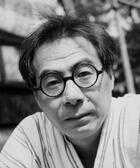


Sakaguchi Ango, the twelfth of thirteen children, was born on October 20, 1906, into a wealthy family in Niigata. His sad and lonely childhood gave way to an irreverent and rebellious adolescence. In 1922, after assaulting one of his teachers, his father sent him to study in Tokyo. In the capital, Ango came into contact with the vibrant cultural life and began to take an interest in literature. In 1925, he obtained a position as a substitute teacher on the outskirts of the city, but he soon left it to enroll at Tōyō University in 1926, where he studied Indian Philosophy. Determined to achieve enlightenment, Ango imposed upon himself a strict routine of study and meditation that eventually led to a state of mental exhaustion. He recovered by studying languages: Sanskrit, Pali, Tibetan, French, and Latin, and enrolled at the French Athenaeum in Tokyo, where he distinguished himself as an excellent student and solidified his passion for literature. In 1928, he began publishing his distinctive stories: a blend of grotesque and irrational elements with horror and caricature. In 1932, he met the writer Yada Tsuseko, with whom he fell platonically in love and with whom he had an ambiguous and toxic relationship, which he captured in his first major work, Fubuki Monogatari (1938), an ambitious, dark, and complex novel that did not achieve the expected success. During the final years of the war, his nonconformist and lucidly provocative essays (On Decay and More on Decay), which questioned Japanese tradition and the "spirit," unleashed a wave of enthusiasm and placed him among the most representative and original postwar authors. This success quickly extended to his stories and tales, characterized by a pessimistic and nihilistic view of existence. With the door to success now open, Ango compelled himself to write at a relentless pace: essays, detective novels, fantasy stories, and historical fiction. His abuse of sleeping pills and alcohol took its toll on his health, but not on his talent. He continued writing relentlessly until, on February 17, 1955, he died at the age of forty-nine from a stroke.